

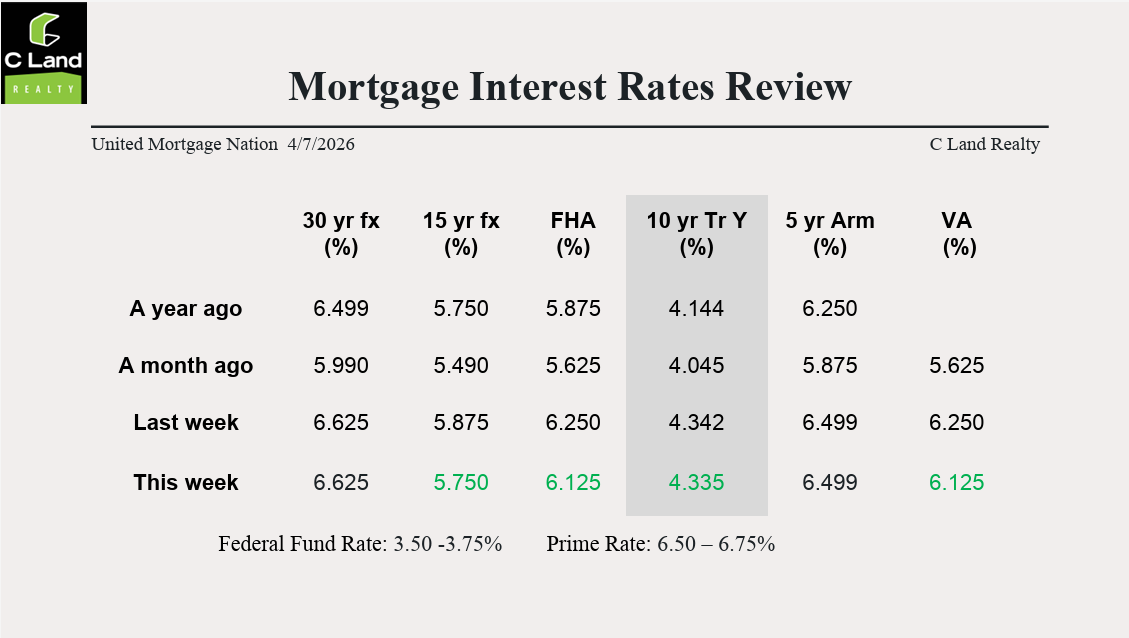
Mortgage Rates Jumped in Week, Rising to 6.46%.
• Mortgage rates rose to the highest level since September, the fifth straight weekly increase.
The average rate on the standard 30-year fixed mortgage climbed to 6.46%, up from 6.38% last week, according to Freddie Mac.
• Mortgage applications for home purchases fell a seasonally adjusted 3% last week compared with the previous week,
according to the Mortgage Bankers Association.
• “The shocks of the jump in rates and the increase in over–all economic uncertainty are likely having an impact on buyer confidence,”
said MBA Chief Economist Mike Fratantoni.
• Home-touring activity, another early indicator of buyer demand, is trailing behind last year.
Weekly average showing activity as of March 30 was up 27% year to date,
while in 2025 it rose 37% over the same time period, according to Zillow’s Showing Time.
Home-Price Growth Slowed in January As Affordability Concerns Weighed.
• U.S. home-price growth slowed in January as affordability constraints continued to weigh on home-buyer decisions.
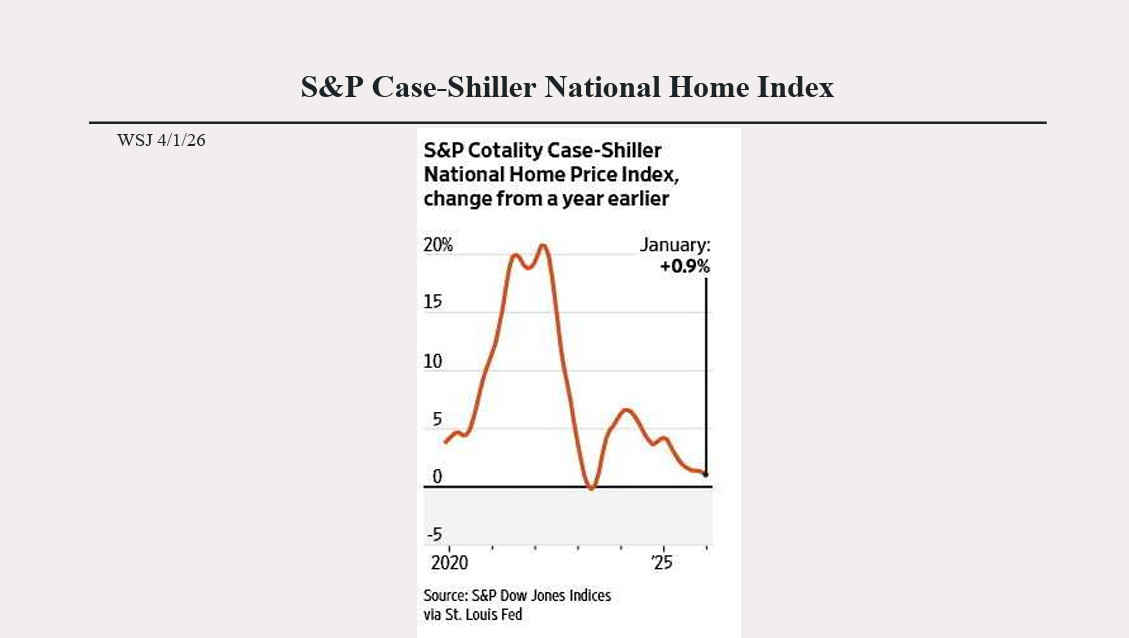
• The S&P Cotality Case-Shiller National Home Price Index, which measures home prices across the U.S.,
rose 0.9% in the 12 months through January, compared with a 1.1% increase in December.
• “The National Index rose 2.2% over the first six months of the period, then fell 1.3% over the most recent six
—a swing that explains why annual gains have compressed to under 1% despite prices remaining historically elevated,”
said Nicholas Godec at S&P Dow Jones Indices.
• For the eighth consecutive month, inflation outpaced national home-price appreciation,
with the consumer-price index running 1.5 percentage points above the 0.9% annual gain.
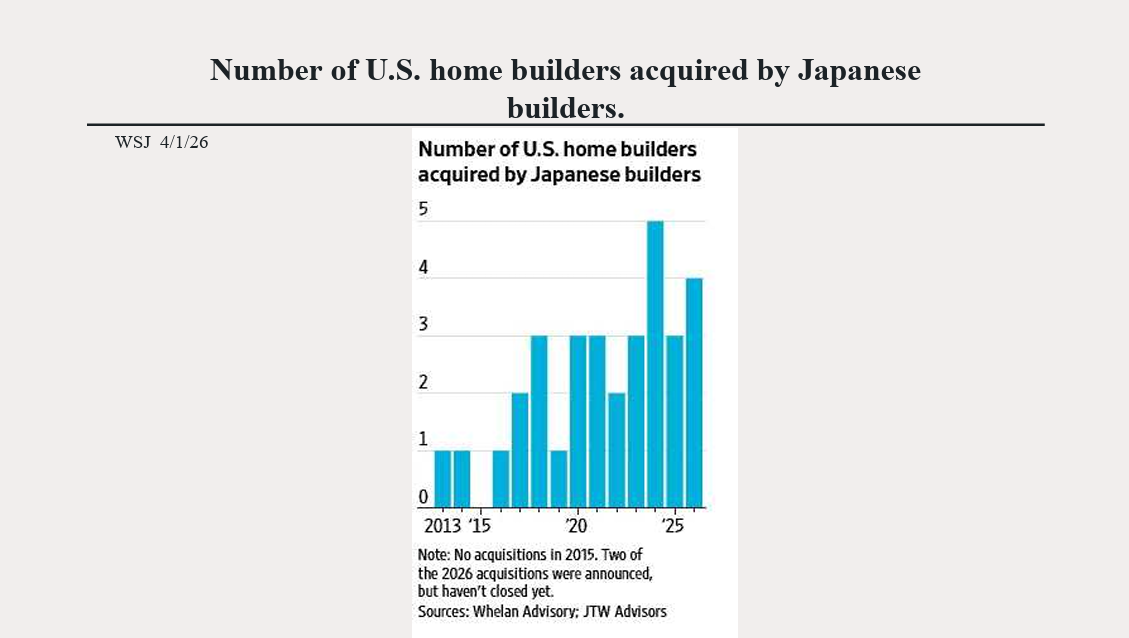
Japan Home Builders Bet Big on the U.S..
• For more than a decade, Japanese home builders have been tiptoeing into the U.S. housing market with small,
discreet acquisitions of private American construction companies. Their quiet era is over.
• Japanese builders have announced or closed acquisitions of 23 U.S. single-family home builders since 2020,
more than double the number from 2013 to 2019.
That doesn’t include the multifamily developers and construction-supply companies they have also bought. By some estimates,
Japanese builders are now set to own about 6% of the U.S. home construction market.
• For these Japanese builders, even a soft U.S. market is a better alternative to expanding at home.
The birthrate in Japan has mostly declined every year for the past decade, and the median age continues to grow older.
Japanese builders look overseas for new markets in which to grow, such as Europe, Australia and especially the U.S.

Hiring Posts Big Surprise Rebound In March.
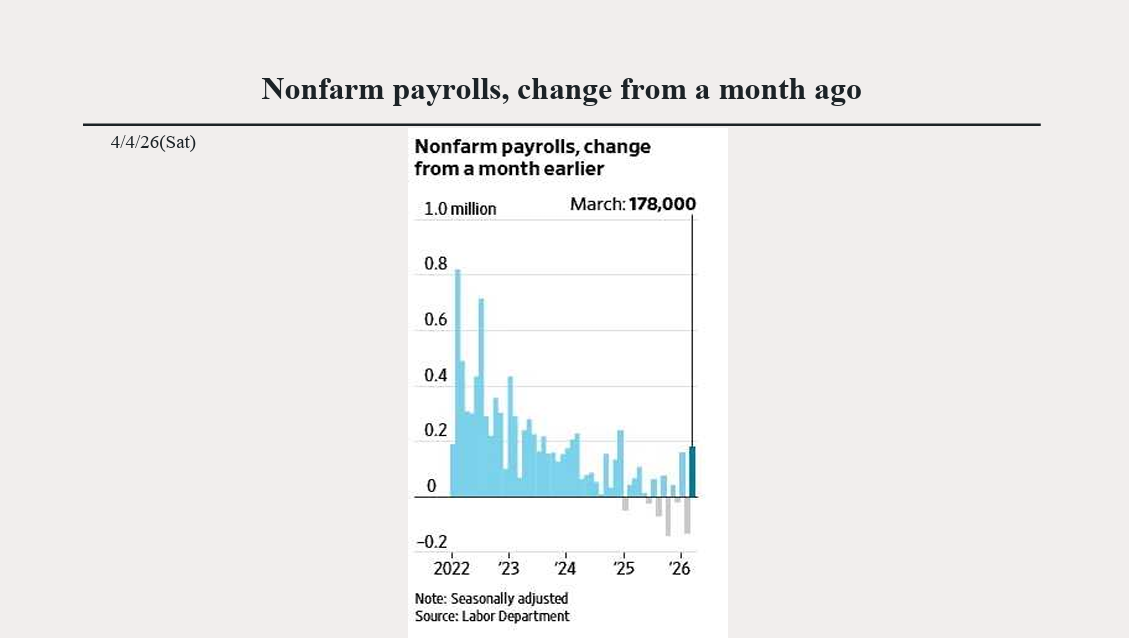
• The U.S. added 178,000 jobs in March, the Labor Department said Friday,
a resilient rebound that blew past expectations and defied concerns about a possible downturn.
• March’s job gains marked the best month for growth in more than a year and were far better than February,
when the U.S. lost more than 130,000 jobs.
• Last month’s numbers also beat the gain of 59,000 jobs that economists polled by The Wall Street Journal had expected to see.
• The unemployment rate fell to 4.3%, from February’s 4.4%.
• The decline in the unemployment rate came with an asterisk:
The labor force shrank by nearly 400,000 people, meaning fewer people were counted as unemployed.
The share of people working or looking for work slipped to 61.9%, its lowest level since the fall of 2021.
• The job gains were driven by a big rebound for the healthcare and social-assistance sector. It added about 90,000 jobs in March.
The Won-Dollar rate surpassed the 1,536, the first time since the global finance crisis
• Driven by concerns over a prolonged war between the U.S. and Iran, the won-dollar exchange rate has soared daily,
surpassing the 1,530 won threshold for the first time in approximately 17 years.
Meanwhile, the stock market is plummeting, threatening the 5,000 level.
• This surge is interpreted as a result of prolonged high oil prices coupled with a slowdown in South Korea’s growth rate.
• Furthermore, the OECD recently lowered South Korea’s growth forecast for this year to 1.7% (down 0.4 percentage points),
adding downward pressure on the won.
• Park Hyung-joong, an economist at Woori Bank, predicted,
“If the high oil price situation does not settle, the exchange rate could rise to the 1,600 won level.”




Join The Discussion