

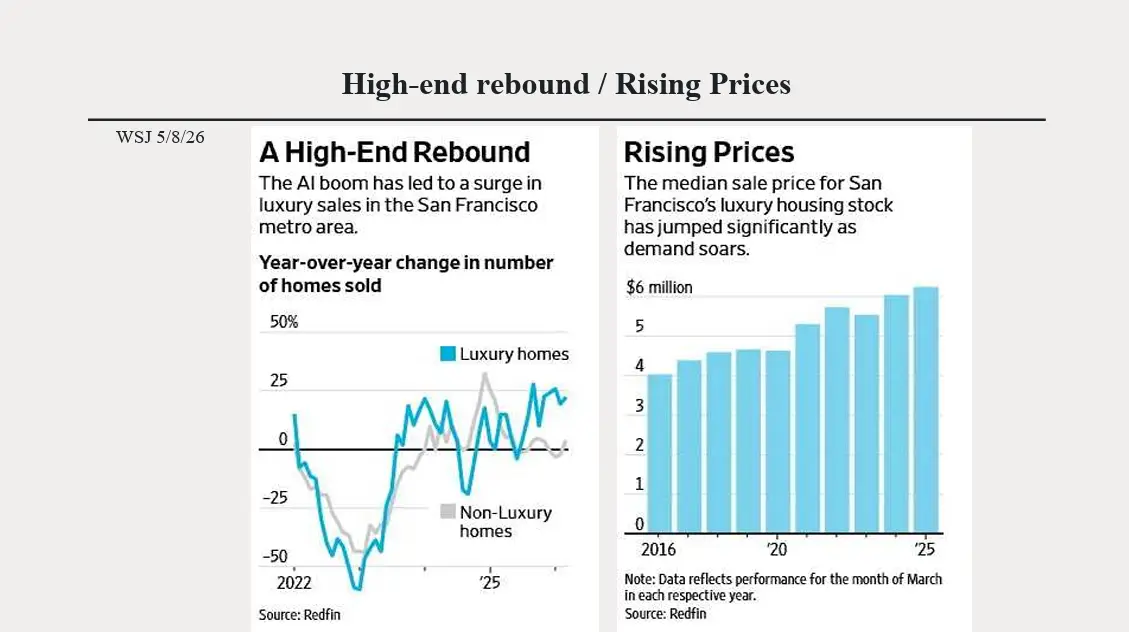
What One Home Sale Tells Us About San Francisco’s Comeback.
• A CONTEMPORARY HOUSE on San Francisco’s Russian Hill has sold
for its full asking price of $24 million, property records show.
The six-bedroom home went into contract a week after going on the market, said local MLS.
• The speedy sale is a far cry from the last time
the house went on the market, for $19.995 million in 2022.
That time around, it took more than a year to sell for just $9.99 million—about half its asking price.
• “The strength of the city’s high-end market feels even stronger than
2021 and [is] very reminiscent of the dot-com market of the late 1990s,” Lucier said.
• Meanwhile, supply is limited, with the number of active listings
in San Francisco’s luxury market down almost 15.2% year-over-year in the first quarter, according to Redfin.
The typical luxury home in San Francisco went into contract in under 12 days in the first quarter,
compared with 28 days in the same period in 2025.
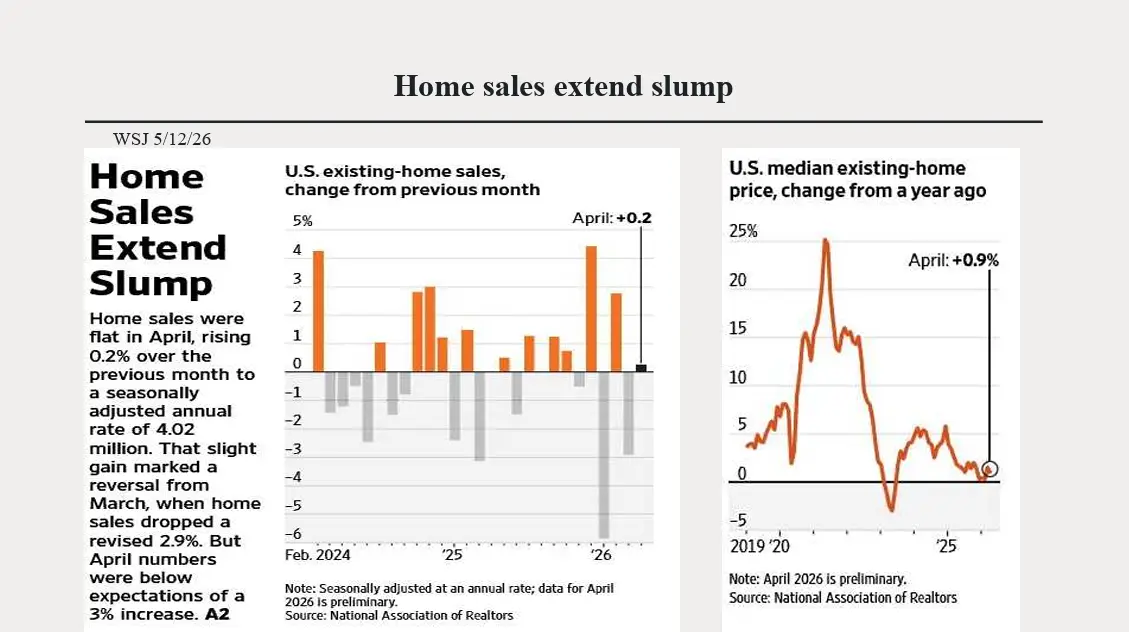
April Home Sales Were Flat, Extending Slump.
• Home sales were flat in April, dealing a substantial blow to a housing industry
that was counting on a strong spring season to emerge from an extended slump.
• Sales of existing homes rose 0.2% in April over the previous month
to a seasonally adjusted annual rate of 4.02 million, NAR said Monday.
• That slight gain marked a reversal from March, when home sales dropped a revised 2.9%.
But April numbers were far below expectations.
Economists surveyed by WSJ had forecast a 3% increase.
• The typical home sold in April was on the market for 32 days, up from 29 days a year earlier, NAR said.
• In competitive markets in the Northeast and Midwest,
agents say they still see pent up demand from buyers who have been waiting for inventory
to rise or prices to go down.
But in the South and West, the inventory of homes for sale has climbed
above prepandemic levels, weighing on prices.
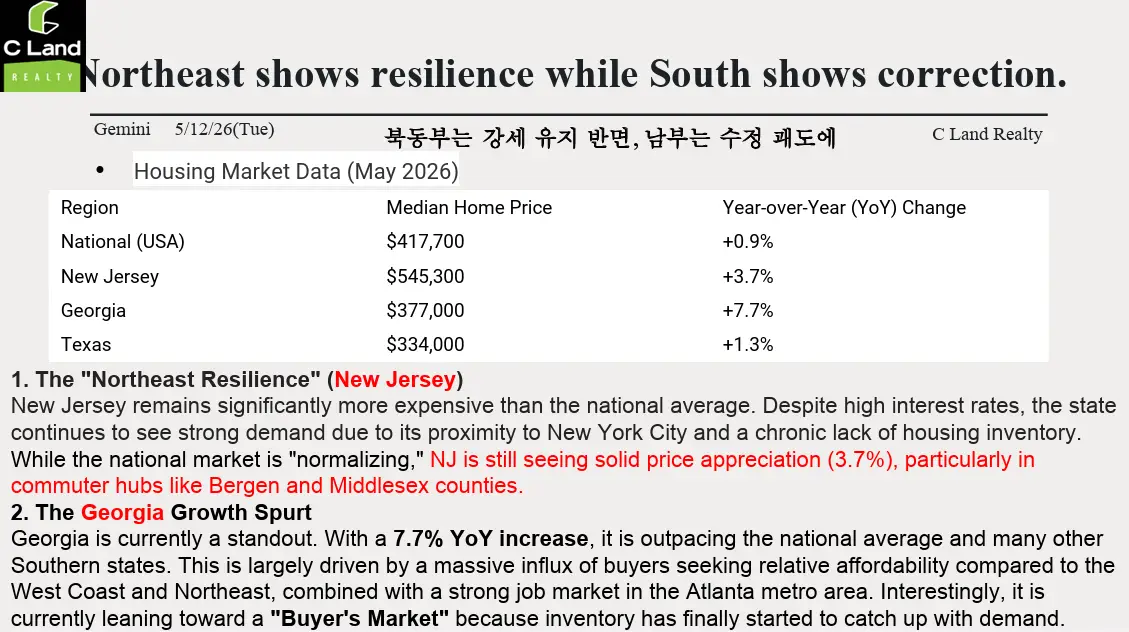
Northeast shows resilience while South shows correction.
3. The Texas Correction
Texas is seeing a much cooler market compared to the pandemic-era boom.
The statewide median is up only 1.3%,
and major metros like Dallas have actually seen price corrections (down about 4%).
This is a classic example of “supply catching up”
—Texas has been much more aggressive with new home construction than NJ or GA,
which has successfully put the brakes on runaway price growth.
4. National Outlook: “Slow but Steady” Nationwide,
we are in a period of normalization.
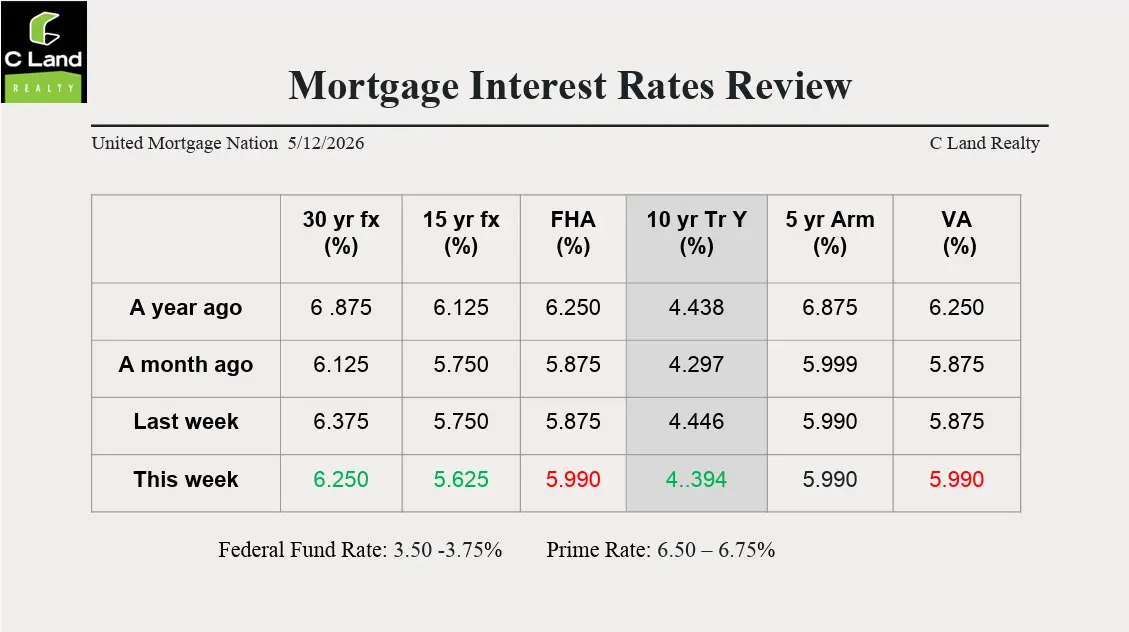
Interest Rates: Average mortgage rates are hovering in the 6.1% to 6.3% range.
This is lower than the peaks of 2024 but still high enough to keep many “move-up” buyers
in their current homes (the “lock-in” effect).
Inventory: Inventory is up about 11%–15% nationwide compared to last year.
This means you have more options as a buyer, but prices aren’t “crashing” because there is still a fundamental shortage of homes.
Summary Tip: If you are looking for value, Texas offers the most room for negotiation right now.
If you are looking for equity growth, Georgia’s current momentum is impressive,
though you’ll be buying in at a higher entry point than two years ago.
NY Budget Agreement Reached
“Including Taxes on High-Priced Second Homes”
• New York Governor Kathy Hochul and the State Legislature
have reached a tentative agreement on the $268 billion budget
for the 2026–2027 fiscal year, ending more than a month of tug-of-war negotiations.
The budget includes a controversial tax plan for high-priced second homes(Pied-a-terre Tax),
alongside various measures aimed at resolving fiscal deficits for local governments—including New York City—
and easing the burden on residents caused by rising inflation.
• The agreement includes a tax on luxury second homes valued at over $5 million.
This new tax will apply specifically to high-end residences in New York City
that are not used as the owner’s primary residence.
This measure is expected to generate at least $500 million in new tax revenue.
He-cession? A Changing U.S. Job Market Is Leaning Against Men.
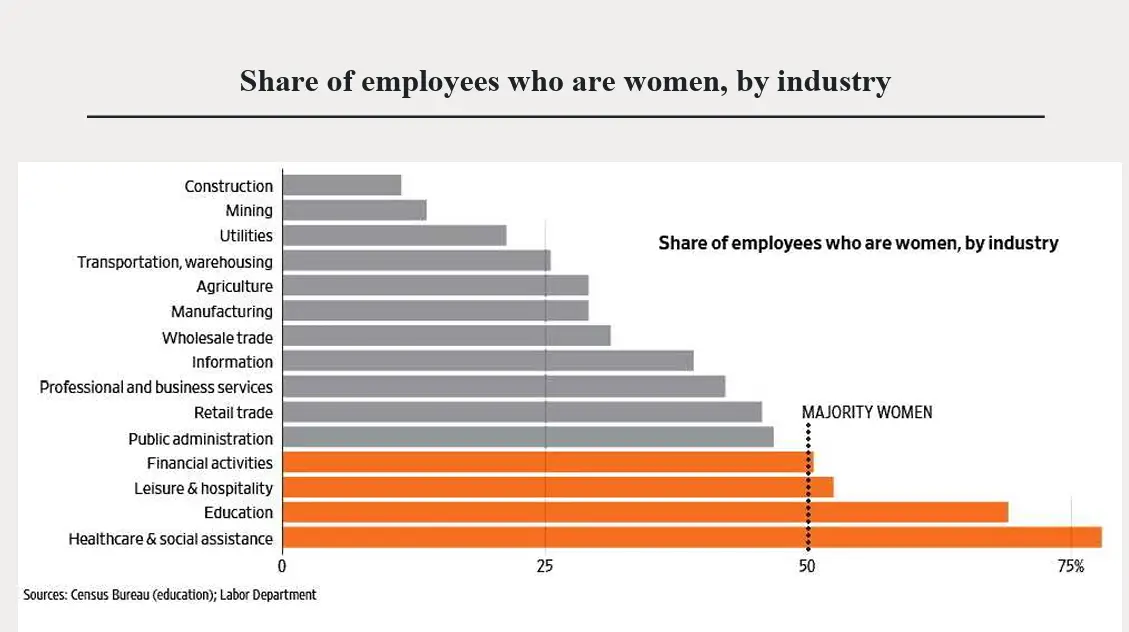
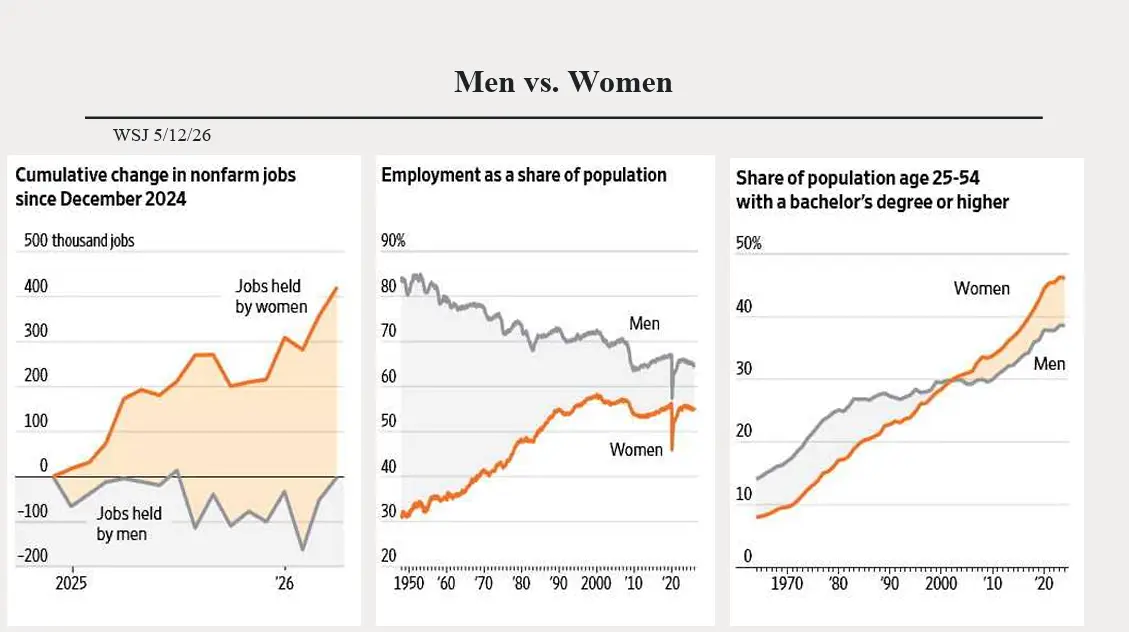
• Over the past year, nearly all net job growth has come from healthcare
and social assistance, a sector with a dearth of men.
Sectors with heavily male workforces have been losing jobs.
The post pandemic period has seen an influx of women in their prime working years into employment.
The share of men working has flatlined.
• The divergent path might widen in the years ahead.
As the needs of an aging population stack up,
occupations that men have historically been loath to enter,
such as jobs as home health aides and medical assistants, will likely play a bigger role in the labor market.
A growing educational divide is also part of the equation:
Women earn bachelor’s degrees at a substantially higher rate than men,
and employment rates among people who are college-educated are substantially higher than those who aren’t.
Musk’s Grok Loses Ground in AI Race.
• Elon Musk’s artificial-intelligence model, Grok, lags far behind its rapidly growing competitors
— and an agreement by parent company SpaceX to rent massive computing power
to Anthropic raises questions about whether it can still catch up.
• Since its launch two years ago,
Grok has reached millions of users through its integration with Musk’s social network,
X, and controversial features such as a sexualized AI companion.
But new data shows its growth appears to have flattened.
• In a survey of more than 260,000 U.S. consumers and worlkers who use AI,
the percentage of respondents who said they paid for Grok remained
mostly flat at 0.174% in the second quarter of 2026 versus 0.173% a year ago,
according to research firm Recon Analytics. More than 6% of respondents said they paid for ChatGPT.




Join The Discussion