

Deepening Polarization in the Housing Market by Price Point
Polarization between luxury homes and first-time (starter) homes is deepening
in the domestic housing market.
According to a report by real estate data firm Zillow, cited recently by Fox Business,
contrasting trends have emerged: demand for luxury homes is surging,
while demand for starter homes is slowing alongside an increase in inventory.
According to Zillow, as of June nationwide, the typical price for a starter home
reached approximately $202,000, up 2.3% year-over-year.
In contrast, the price of a typical luxury home rose 3.1% over the same period to around $1.9 million.
In terms of inventory, as of June, starter home listings increased 4.5% compared to the same period last year,
whereas luxury home inventory dropped by 5.2%.
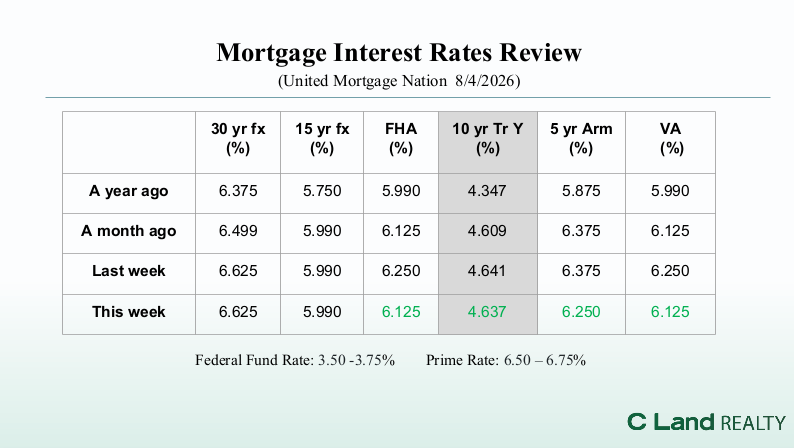
Mortgage Rates Reach 1-Year High Due to Concerns Over Prolonged War and Inflation
Mortgage interest rates have reached their highest level in a year amid
concerns over inflation driven by the prolonged blockade of the Strait of Hormuz.
According to Freddie Mac, a government-sponsored mortgage agency, on the
6th, the average interest rate for a 30-year fixed-rate mortgage rose by 0.03
percentage points from the previous week to 6.69%. This is the highest level in a year, since July 31 of last year.
Mortgage rates had dropped below 6% in late February, just before the
outbreak of the US-Iran war, but have maintained an upward trend since the war began.
Further increases in mortgage rates could add a political burden to President
Trump and the Republican Party ahead of the upcoming midterm elections in November.
Judge Pauses NYC Tax On Second Homes.
New York City Mayor Zohran Mamdani’s new piedà- terre tax hit a wall on
Monday after a state Supreme Court justice on Staten Island ordered an
emergency pause on the implementation of the new surcharge.
The ruling came in response to a Friday lawsuit from a group of three
aggrieved homeowners suing to delay the rollout of the tax because of how it
has been executed so far.
Justice Wayne Ozzi entered a temporary restraining order mandating that the
Department of Finance remove the tax roll of 960,000 properties that it
published last month as part of the tax rollout.
The court banned the city from taking additional enforcement action on the tax warning notices already mailed to 17,000 homeowners.
The next hearing is scheduled for Aug. 31.
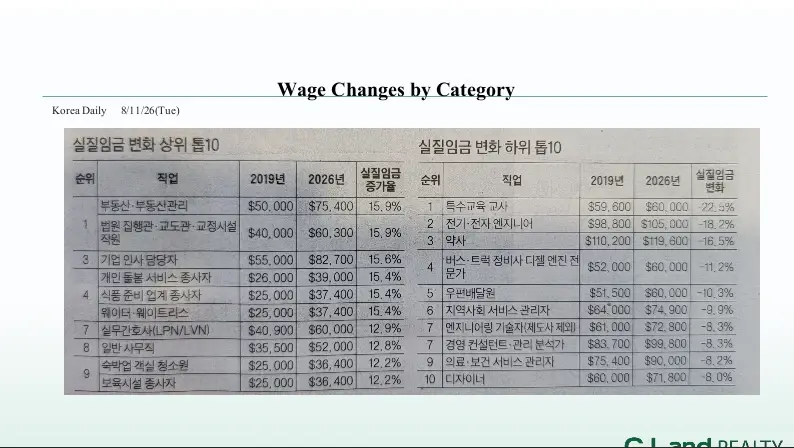
Wages Rose 38%… But Real Income Growth Was Only 6%
Wages for domestic workers following the pandemic rose at the fastest pace in 40 years,
but soaring inflation offset most of the wage gains.
While paychecks grew significantly, prices rose even faster, meaning actual purchasing power barely improved.
According to a CBS News analysis of data from the U.S. Census Bureau and
the Bureau of Labor Statistics (BLS), median weekly earnings for full-time
regular workers in the first half of this year were recorded at $1,250.
This represents a 37.7% increase ($342) compared to $908 prior to the pandemic in 2019.
Over the same period, consumer prices rose 30%, eating up roughly 80% of the wage gains.
Ultimately, real wages adjusted for inflation increased by an average of about $70 per week,
showing a 7-year real wage growth rate of 5.9%—translating to less than 1% annually on average.
Where REIT Investors Have Earned the Best Returns
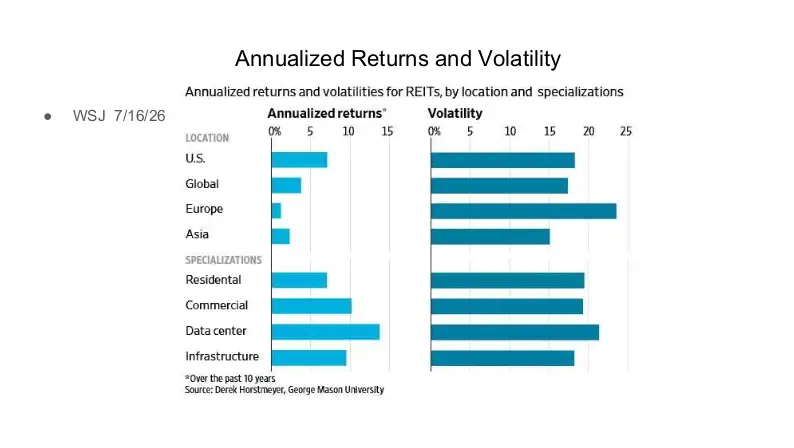
REITS are good vehicles to gain exposure to the real-estate industry without
the capital commitment or risks of owning physical real estate.
But it’s easy for investors to become paralyzed given the plethora of options available.
An investor can choose to pick real-estate investment trusts that focus on
residential properties, commercial properties, data centers or infrastructure.
There are even exotic offerings like timber and salt caves.
First, when we looked regionally, we found that U.S.- focused REITs are tops
and those focused on Europe were worst.
Turning to REIT specialization in the U.S., we see that REITs focused on data
centers have done best (with slightly elevated risk levels), while residential REITs have lagged behind.
Zuckerberg Sets AI Vision?
Mark Zuckerberg has a new game plan for winning over hearts and minds to
his company’s artificial-intelligence efforts: open models and an open hand.
In a wide-ranging essay, the Meta Platforms chief executive outlined a new
course of action he presented as a way to spread the wealth and opportunity
from AI to users around the world, and to residents of the communities that host the data centers powering it.
He wrote. “Meta’s mission since our founding has focused on putting power in people’s hands.
If our beliefs and principles lead, then the balance of power will favor individuals and a better future for everyone.”
Zuckerberg also wrote that one of the U.S.’s current disadvantages in its race
against China to develop super intelligent computer systems is the difficulty of building infrastructure stateside.
Meta is planning up to $145 billion on capital spending this year,
largely to build data centers, and $600 billion by 2028.
Hanwha Seeks Naval Shipbuilder
South Korean conglomerate Hanwha has made a nonbinding offer valued at
more than $1 billion to buy Austal USA, a builder of ships and submarine parts for the U.S. Navy.
Australian shipbuilder and defense contractor Austal said the potential deal for
its U.S. subsidiary is valued at between $1.05 billion and $1.2 billion.
The acquisition would provide Hanwha with Austal’s Mobile, Ala., shipyard and
access to major contracts that include some of America’s most sensitive naval programs.
Hanwha is seeking to expand its commercial and military shipbuilding
ambitions in the U.S. at the same time President Trump is trying to revitalize
domestic shipbuilding. Hanwha bought Philly Shipyard less than two years
ago and has vowed to invest billions of dollars to expand and modernize the facility.




Join The Discussion