
Home Maintenance Series
Hot Water Tank
Presented by Stephen Lee with CRI
Water Tanks at Home
-(Gas) Hot Water Tank
-(Electric) Hot Water Tank
-Tankless Hot Water System
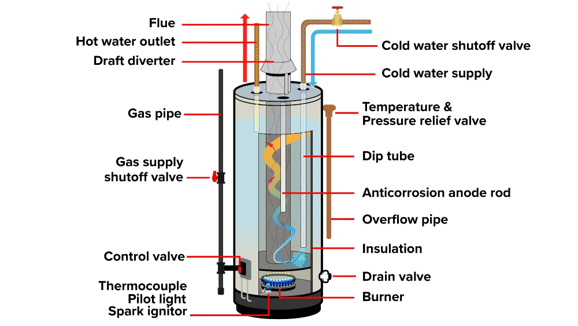
(Gas) Hot Water Tank Assembly
Typical Life Span & Costs
Gas(Electric) Hot Water Tank
- 8 – 12 years
- $1000 – $2500 (40 – 50 Gallons)
- Typical size: 30, 40, 50 Gallons
Tankless Hot Water System
- 15 – 20 years
- $2000 – $4500
- On demand
Recovery Rates
Recovery Rate Defined:
Gallons per hour (GPH) the unit can reheat to a set temperature rise (typically 90°F rise).
Typical Recovery Rates by Type:
| Type | Recovery Rate (approx.) |
| 40-gal gas tank | 30–40 GPH |
| 50-gal gas tank | 40–50 GPH |
| Electric tank (40–50 gal) | 15–25 GPH |
| Tankless (gas) | Continuous (up to 5 GPM or more, depends on model) |
| Tankless (electric) | 2–4 GPM (good for small households or point-of-use) |
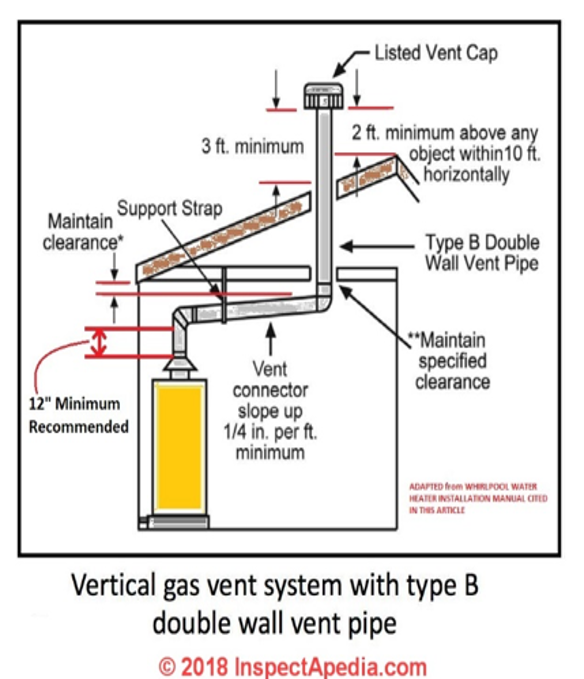
Flue
– Pipe or duct that vents the combustion gases including carbon monoxide.
-Connected to outside roof through vent pipe
-Keeps the slope( ¼ inch per ft minimum)
-4 inch diameter tube
Flue system diagram
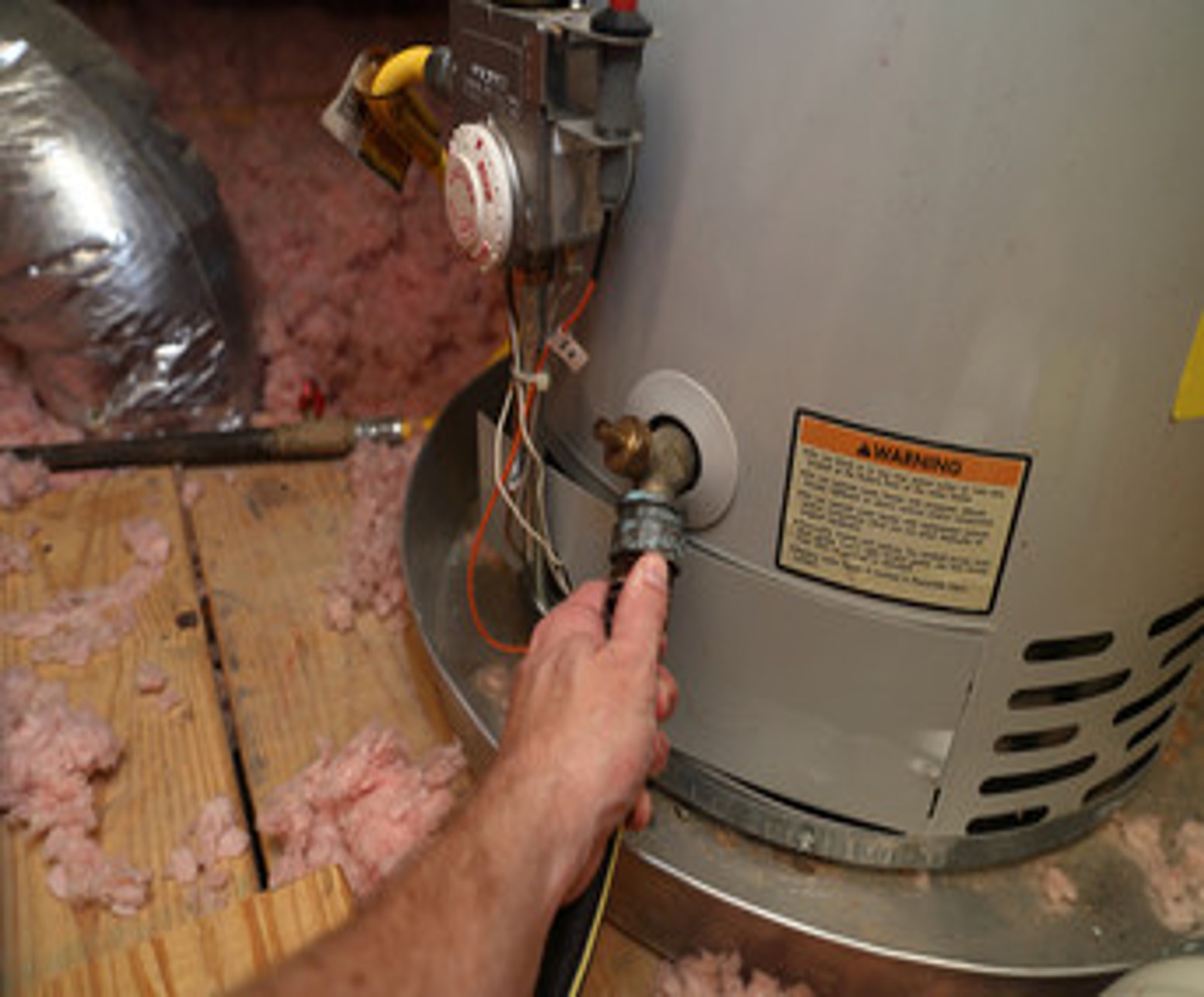
T & P Relief Valve
-Temperature & Pressure Relief Valve
-To relieve pressure at 150 psi and temperature at 210 degree F.
-To prevent the tank from rupturing or exploding
-Sometimes this valve is leaking.
Anticorrosion Anode Rod
-A sacrificial component, typically made of magnesium, aluminum,
or zinc that protects the tank from corrosion by attracting corrosive elements in the water.
-To expand the lifespan of the water heater.
Water Tank Pan
Tankless Water Heater Diagram
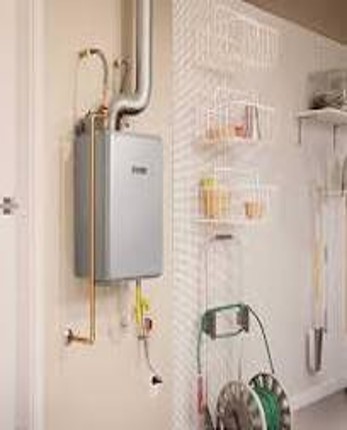
Tankless Water Heater
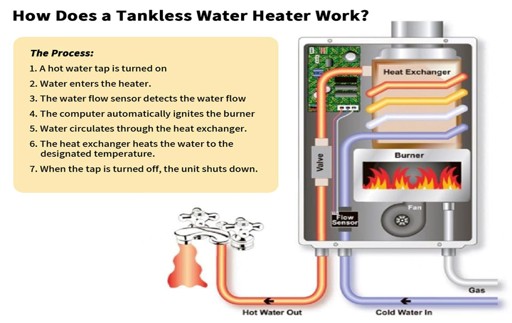
Pros of Tankless systems
Energy Efficiency
- Heats water only when needed, so no standby heat loss like traditional tank heaters.
- Can save 10–30% on energy bills, especially in homes that use less hot water.
- Endless Hot Water
- As long as the unit is sized correctly, you’ll never run out of hot water (great for long showers or big families).
- Space-Saving Design
- Wall-mounted and much smaller than bulky tank heaters—frees up floor space.
- Longer Lifespan
- Typically lasts 15–20 years (compared to 8–12 years for tank heaters), with proper maintenance.
- Lower Risk of Water Damage
- No large tank that can leak or burst.
Cons of Tankless systems
Higher Initial Cost
- The unit itself is more expensive, and installation can cost significantly more (especially if retrofitting an older home).
- Limited Flow Rate
- Might struggle to supply multiple hot water demands at once (e.g., shower + dishwasher + laundry).
- You may need multiple units for larger households.
- Inconsistent Temperatures
- Some users experience a “cold water sandwich” (a brief burst of cold water between hot water flows).
- May take a moment longer to deliver hot water.
- Upgrades May Be Needed
- Older homes may need upgraded gas lines, venting, or electric service for compatibility.
- Maintenance
- Needs regular descaling (especially in areas with hard water) to keep performance up.




Join The Discussion