

What will Happen?
What Happens for Buyers:
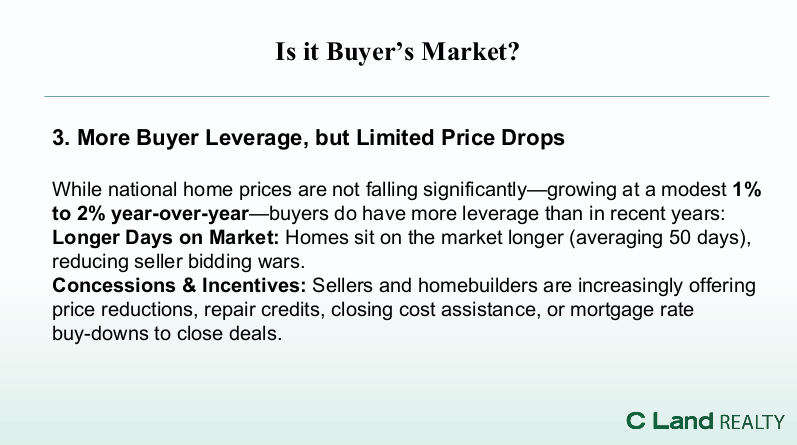
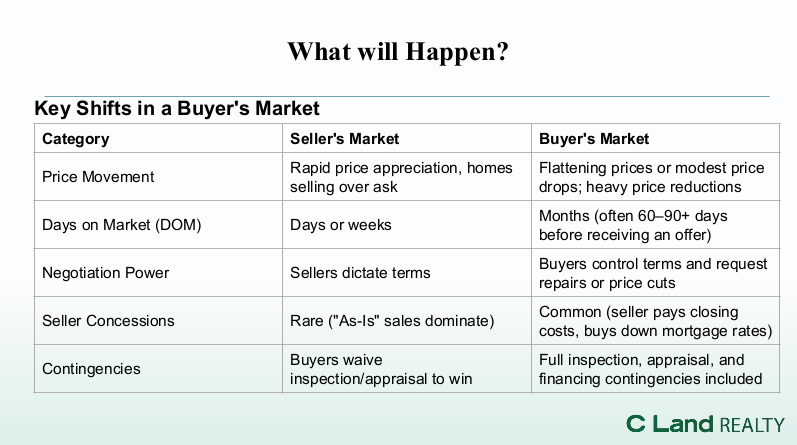
Greater Leverage & Bargaining Power: Instead of facing bidding wars, buyers
can offer below asking price or demand price reductions following an inspection.
Reappearance of Seller Concessions: Sellers frequently offer financial
incentives to close a deal, such as covering the buyer’s closing costs,
paying for a 2-1 temporary mortgage rate buydown, or offering seller concessions.
Breathing Room: Homebuyers gain time to tour multiple properties, evaluate
options, and submit offers with standard protective clauses
(inspection,appraisal, financing, home-sale contingencies) without fear of being immediately outbid.
What Happens for Sellers:
Homes Sit Longer: Listings take significantly longer to sell, requiring patience and strategy.
Pricing Precision Matters: Overpriced homes quickly go “stale” on the MLS,
forcing sellers to make noticeable price cuts to re-engage buyers. (NARRPR.com)
Home Preparation is Essential: Sellers can no longer sell homes in poor condition for top dollar.
Staging, cosmetic upgrades, and addressing
pre-inspection repairs become mandatory to stand out against competing inventory. (Home warranty program)
What Happens for Real Estate Investors & Developers:
Higher Cap Rates: Lower acquisition prices can improve rental yield
percentages for investors buying with cash or significant equity.
Slower New Construction: Homebuilders dial back speculative building and
slow down new ground-breaks to avoid accumulating unsold inventory.
Increased Foreclosures/Short Sales (In Extreme Downturns): If the market
shift is driven by a broader economic recession rather than just rising inventory, distressed property sales may gradually rise.




Join The Discussion