

Kevin Lee, 55, Fort Lee charged and prosecuted
Seung Y. Lee (also known as Kevin Lee), 55, of Fort Lee, New Jersey—who operated Pinnacle Capital—was charged and prosecuted in federal court.
The case concluded with his sentencing in the U.S. District Court for the Eastern District of New York: The Charges & Scheme: Lee ran a bank fraud scheme where his company submitted hundreds of falsified mortgage and Home Equity Line of Credit
(HELOC) loan applications to financial institutions on behalf of clients, submitting altered financial documents to secure loan approvals.
Sentencing: On October 29, 2026, Lee was sentenced to 33 months in federal prison for bank fraud.
Financial Penalties: As part of his sentence, he was ordered to forfeit $841,549 in criminal profits generated through the scheme.
Some New York City Real Estate Brokers Are Still Collecting Broker Fees from Tenants
$60,000 in fines imposed for 55 violations, including improper charges disguised as management fees and other expenses.
Even after New York City implemented the FARE Act, which prohibits landlords from passing broker fees on to tenants, some real estate brokers continue to charge tenants various fees under different names.
According to a report published by the local newspaper The City on October 29, some brokers are still finding ways to circumvent the law by charging tenants fees such as management fees and advertising fees for property listings.
By mid-October this year, the DCWP had received approximately 2,500 complaints and inquiries related to the matter. Authorities investigated 130 suspected violations and issued 91 summonses. Of those cases, 55 resulted in violations, with total fines amounting to $60,000.
Alpine ranks No. 15 on list of priciest ZIP codes
New Jersey has a lot to offer, from a top-tier education system and extensive public transportation network to a diverse range of lifestyles, history and cultures. These are just a few of the things that make us love the Garden State, but these things also come with a price tag — and an expensive one, at that.
So it likely comes as no surprise that New Jersey, historically one of the priciest states in the nation, had a record seven ZIP codes named in Property Shark’s annual ranking of the nation’s 100 most expensive ZIP codes for homebuying.
The Garden State was led by Alpine’s 07620, which ranked 15th overall in the report. This Bergen County community reached a record-high median sales price of $4.38 million, up from $4.35 million in 2025.
Affordable Housing ‘In God’s Backyard’
The megachurch is among a number of congregations betting that underused land can advance their mission. Across the country, churches with shrinking attendance or spare acreage are turning to developers to build affordable housing on their own property, a trend known as “YIGBY,” or Yes in God’s Backyard. The goal: sustain their ministries while easing housing shortages.
The pressure is palpable. In 2025, 26% of Americans said they attended religious services at least weekly, down from 31% in 2013, while the share who seldom or never at–tend rose from 42% to 53%, according to the Public Religion Research Institute’s Census of American Religion.
The University of California, Berkeley’s Terner Center counts 47,000 acres of developable faith-based land in California. Other groups have estimated tens of thousands more in Maryland, Florida and Massachusetts. Deals move slowly, though, and terms vary.
U.S. Economy Roars Ahead, but Leaves Some Behind
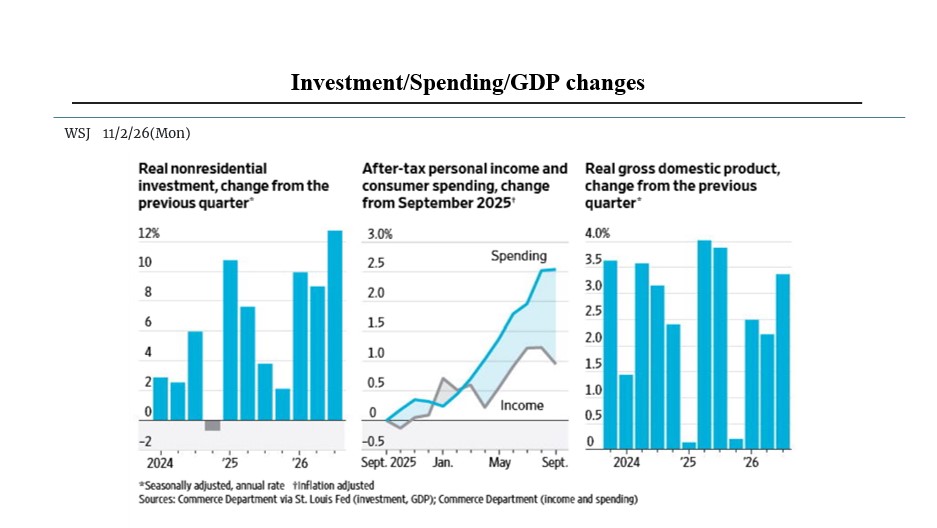
The U.S. economy is accelerating, gathering enough momentum from the artificial-intelligence boom and robust consumer spending to crash through wars, volatile markets and trade disruptions. Indeed, no major advanced economy has been growing like the U.S.
AI, however, has crowded out other segments. Housing construction has flatlined, hit by high borrowing, materials and labor costs as developers compete with the data center build-out.
Consumer- and capital spending gains were more than enough to offset a widening trade deficit (much of the equipment going into AI is imported) and persistent weakness in the housing market.
Over the 12 months ended in September, inflation-adjusted, or real, spending increased by 2.5%. But real, after- tax personal income grew 1%. As a result, the saving rate—the saving rate—the share of income left over after spending—dropped from
5.1% to 3.8%.
Job Market Picture Is Mixed
Aside from inflation, one of the top economic concerns for voters is the state of the job market. And here the picture is mixed.
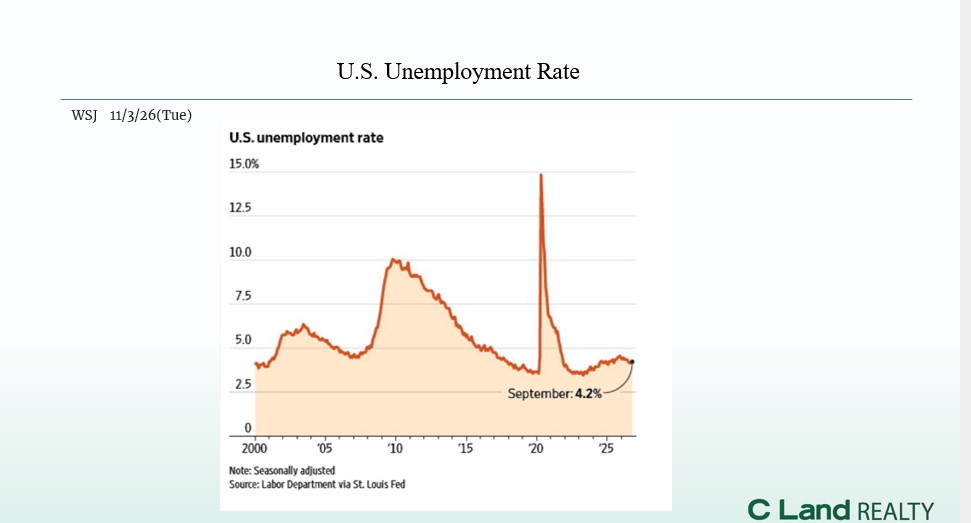
Job growth has slowed considerably since President Trump took office in early 2025. But at the same time, immigration is also down, which means fewer people are looking for jobs and less hiring is needed to keep unemployment stable. At 4.2%, the unemployment rate is virtually unchanged since November 2024, and it is still very low by historical standards.
That adds up to a slow but steady job market with few layoffs and little hiring. If you have a job, you probably have little reason to worry about losing it. If you don’t (and if you don’t happen to be an electrician or a plumber), finding one can be far from easy.
The Bots Are Coming for Amazon
Amazon.com has long been the first stop for many online shoppers, but Meta Platforms just built a new one.
In September, the social media company behind Instagram rolled out its personal AI agent, dubbed Muse. The animated personal shopper that can also complete tasks like booking travel and making budgets has exploded in popularity. More than 10 million people in the U.S. and Canada set up Muse agents in its first month and a half, the company said.
Amazon is a digital ad giant, trailing only Alphabet’s Google and Meta, with nearly $70 billion in ad revenue last year. A big chunk of that comes from charging companies to place sponsored ads in front of Amazon shoppers.
Muse could disrupt Amazon’s model by finding and buying products, effectively by passing the human browsing experience.
Could Amazon cut a deal with Muse?





Join The Discussion