

Immigration Raids Hit Housing Market
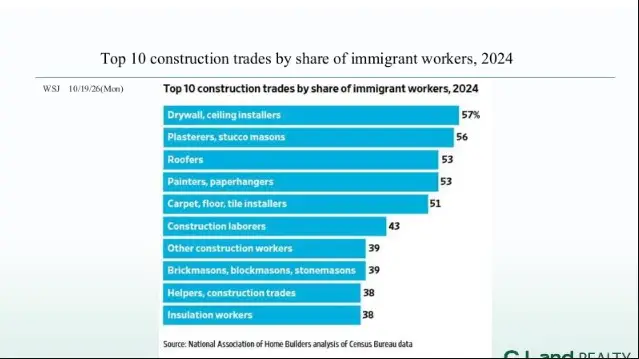
The summer surge in federal immigration raids is hitting the housing market, pushing up labor costs and freezing projects.
Nearly two-thirds of builders said immigration enforcement is affecting their labor force, up from 23% in March and 13% a year ago, according to a September John Burns Research & Consulting survey.
A September survey from the NAHB found the cost of labor had increased a median of 4.2% from the previous year.
And even if contractors are able to find workers, the labor shortage means they have to pay them significantly more. Brannock, the Jacksonville builder, said local framers’ wages used to work out to around $20 an hour. Now, that is up to $40 to $45 an hour. For the average 2,500-squarefoot house, framing labor, which used to cost $10,000, now runs builders $25,000 to $28,000, he said.
The Battle To Control How Americans Buy Homes
The real-estate industry is tearing itself apart over a question that home buyers haven’t had to ask in decades: When you search for a home online, are you actually seeing every property for sale?
For the better part of two decades, the answer to that question has largely been yes, with the vast majority of listings available on sites like Zillow and Trulia. But Compass— now the nation’s largest brokerage—is changing the game. Compass offers its sellers the option to market their homes first as “private exclusives” through the company’s internal website before putting them on listings sites or the local multiple listings service. In fact, it’s been actively encouraging its agents to take their listings off those portals. In New York, for instance, Compass recently offered a $1,000 credit to agents who agreed to pull their listings off the website StreetEasy.
The Battle To Control How Americans Buy Homes
While Compass once controlled only a small percentage of listings, that changed in January with the company’s controversial acquisition of the behemoth Anywhere Real Estate, parent company of Coldwell Banker, Corcoran, Century 21 and Sotheby’s International Realty. Now a much higher percentage of properties for sale could be hidden from potential home buyers.
Compass says its model offers sellers more choice on how to market their homes, but critics say it is harming the consumer. Now the long simmering industry dispute is spilling over into public view, with lawmakers and civil-rights advocates taking notice.
Critics say Compass is keeping listings in-house to increase the likelihood that one of its own agents will bring the buyer, thereby earning double the commissions for Compass.
“Sellers could get hurt because the brokerage has this self-interest,” Miller said.
The Battle To Control How Americans Buy Homes
Since the merger, Compass’s stance on private listings has made it a lightning rod for litigation and scrutiny. The company is now involved in litigation with Zillow as well as the California Regional MLS, one of the country’s largest listing services. In July, Rep. Scott Fitzgerald, the Wisconsin Republican who chairs the House Judiciary Committee’s antitrust subcommittee, asked Compass CEO Robert Reffkin for a briefing on its private-listings network, warning that private networks can create “velvet ropes” around homes.
In an August essay in Time magazine, NAACP President Derrick Johnson said private-listing networks are akin to “digital redlining.”
Young Adults Don’t Buy Homes Even If They Have the Money
A survey reveals that high home prices and mortgage interest rates are not the only obstacles preventing young adults from buying a home. Even when they have the financial capability required to purchase a home, financial anxiety, information overload, and distrust in real estate experts make them hesitate to enter the market.
According to the “2026 Next-Gen Homebuyer Report” recently released by First Home IQ and National MI, 63% of Gen Z and Millennial consumers responded that they feel overwhelmed by an excessive amount of home-buying information.
Additionally: 42% have delayed consultations with real estate professionals.
37% avoid the thought of buying a home altogether.
Young Adults Don’t Buy Homes Even If They Have the Money
Distrust in real estate professionals was cited as a major factor holding back young adults from homeownership:
– 63% of respondents evaluated that mortgage and real estate professionals possess adequate expertise
-37% believed that professionals put the client’s best interest first.
– 12% expressed confidence that they would be treated fairly during the purchasing process.
– 60% worried about potential unfair treatment or disadvantages during transactions.
– 58% felt pressured into making bad decisions.
– 57% worried about not being properly guided toward better options that favor them.
Misunderstandings regarding upfront costs and actual ownership costs were also analyzed as factors hindering homeownership:
– Half (50%) of respondents believed they needed a 20% down payment relative to the house price to
buy a home. (In reality, mortgage products with lower down payments exist, along with various
government support programs.)
Gasoline Price Rise Hits Hard In Some Battleground States
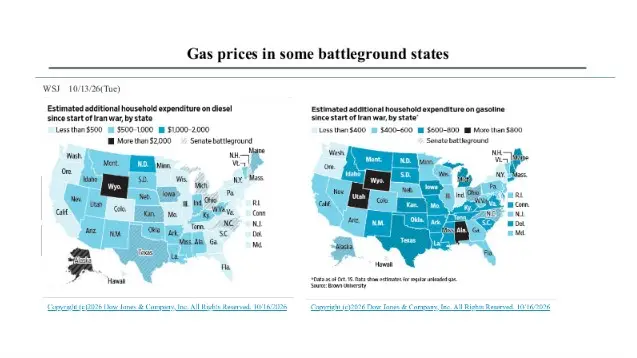
Rising fuel costs tied to the Iran war are the main driver of inflation, which rose to 3.7% in September. In Wyoming, the typical household has spent an extra $969 on gasoline this year because of the Iran war, according to Brown University. In Oregon, the additional burden was just $336.
Regional gas-price increases vary because of differences in refineries and transportation costs. At the same time, people in rural states tend to consume more gasoline because they drive bigger vehicles over longer distances. The burden, again, falls heavily on agricultural regions, where the fuel is used to power tractors, combines and trucks. Wyoming led the pack with an additional per household cost of $2,239 due to higher diesel prices—almost five times the national average—closely followed by the key Senate swing state of Alaska at $2,167. Swing states Iowa, Kansas, Maine, New Hampshire and Texas were also hit harder.
Musk Pledges SpaceX Stock for Kids
Elon Musk said he would give every child in America one SpaceX share, following pledges by rival Anthropic and other high-profile billionaires to donate some of the wealth accumulating during the artificial-intelligence boom.
“Next year, I will give one of my SpaceX shares to every kid in America,” Musk said in a post on X early Monday. “This will be the first of many.”
Shares in the company closed up 1.3% Monday at $147.96. According to the latest data from the U.S. Census Bureau, there are about 73 million children under the age of 18 living in the U.S. That could equate to Musk’s giving away roughly $10 billion in stock.
The pledge comes a day after AI competitor Anthropic said it plans to commit 5% of its shares to a new “public benefit fund” with the flexibility to make charitable donations or direct money to “specific populations.”
Musk Injects $276 Million into the Republican Party
Elon Musk, Chief Executive Officer (CEO) of Tesla (pictured), has been revealed to have injected at least $276 million into supporting the Republican Party in the third quarter alone ahead of the midterm elections.
By pouring in a massive amount of political funds, Musk has emerged as the largest donor in this midterm election.
According to Federal Election Commission (FEC) records, Musk donated $158 million in Q3 to the “Senate Leadership Fund,” a super PAC supporting Republican Senate candidates.
Besides Musk, other mega-donors for the Republican Party are also pouring out large funds ahead of the midterm elections.
Mega-donors are also pouring funds into the Democratic Party. Representative Democratic donor George Soros’ side was recorded donating $102 million ahead of this election to the super PAC “Democracy PAC.”
Flying Tesla Marks a Shift in Auto Race
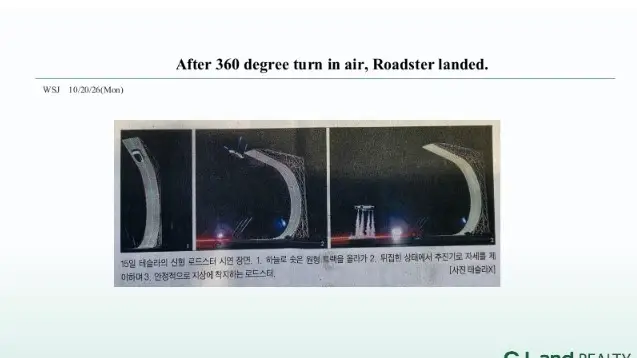
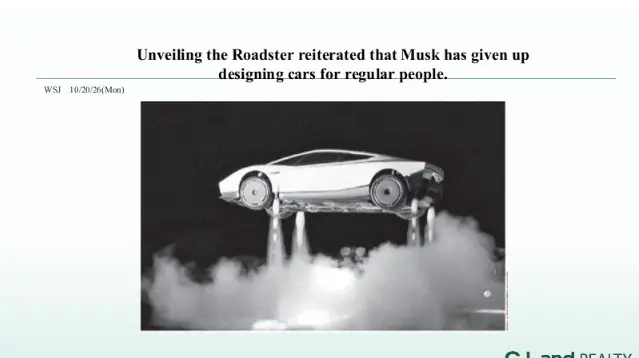
With a flying sports car, Elon Musk displayed again that he’s America’s biggest dreamer. So when the Tesla CEO puts on a flashy show, as he did Thursday at a rocket facility near Waco, Texas, one must take note— not because the new Roadster is going to become a bestseller. After almost a decade of promises, it’s frankly hard to believe the halo car will actually begin production in 2028 with all of the features Musk laid out.
He says the Roadster is the last new vehicle Tesla will offer for humans to drive and is betting instead on remaking Tesla as a robotics company.
In effect, Musk is leaving the mainstream car market to the Chinese—who, he has suggested, are so formidable that many Western automakers are unable to compete without government intervention. It’s a telling sign of where things are going for the Western auto industry.




Join The Discussion