

Why did Samsung move to TX
Three Distinct Lenses of Analysis
1. Strategic Consolidation 2. Macroeconomic/Political Environments 3. Internal Operational Shifts
• The relocation of Samsung Electronics America’s (SEA) headquarters from Englewood Cliffs, New Jersey,
to Plano, Texas—announced in June 2026—is a highly significant corporate move.
What makes this shift particularly striking to business analysts is its timing:
it occurred less than a year after Samsung held a grand opening for its multi-million-dollar flagship campus in Englewood Cliffs.
• Analyzing this event requires looking at it through three distinct lenses: **strategic consolidation, macroeconomic/political environments, and internal operational shifts.**
1. Strategic Consolidation (The “Texas Ecosystem” Pull
• The foremost business driver for Samsung is the gravitational pull of its massive ecosystem in Texas.
The move isn’t just about an office building; it is about bringing executive leadership into alignment with the company’s heaviest U.S. investments.
• Proximity to Semiconductor Assets: Texas is the epicenter of Samsung’s American manufacturing.
The company operates a major semiconductor plant in Austin and is completing a massive,
multi-billion-dollar advanced chip fabrication facility in Taylor, Texas (slated for cutting-edge production).
Moving the corporate headquarters to Plano puts leadership in the same state as its most critical, capital-intensive business units.
• Synergy with Existing Plano Operations: Samsung is not moving into a vacuum;
it is consolidating operations onto its existing campus at the Legacy Central development in Plano.
This site already hosts substantial mobile and network divisions.
Unifying corporate leadership with the mobile, network, and semiconductor arms under “one roof” improves cross-departmental coordination.
2. Macroeconomic and Policy Climate (NJ vs. TX)
• This move has reignited a fierce debate among economic policymakers regarding state competitiveness.
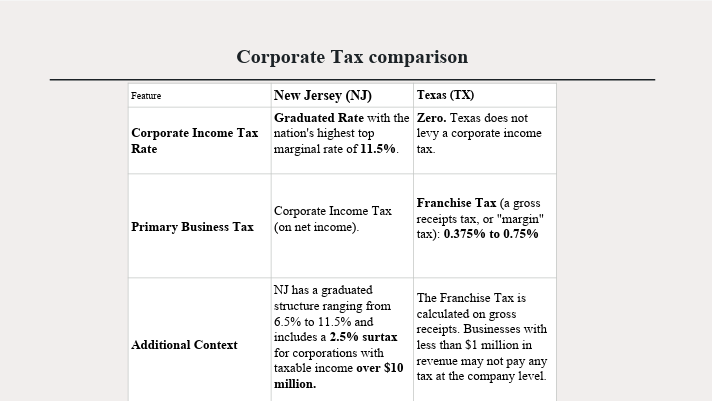
• The Business Climate Contrast: Local business groups, like the New Jersey Business & Industry Association (NJBIA),
immediately flagged the relocation as a “wake-up call” and blamed New Jersey’s stringent tax policies and regulatory environment.
Conversely, Texas has spent over a decade aggressively positioning itself as a corporate tax haven with a lower cost of living and less regulatory friction.
• The “Sun Belt” Corporate Migration: Samsung is following a well-documented path.
North Texas (specifically the Plano/Frisco corridor) has become a magnet for coastal corporate giants.
Samsung’s move adds another blue-chip name to a region that has successfully attracted
the North American headquarters of companies like Toyota, McKesson, and Charles Schwab.
3. Structural Reorganization & Human Capital Impact
From an organizational management perspective,
this event highlights how rapidly multi-national tech companies can shift strategies when pursuing efficiency,
even at the cost of immediate sunk costs or employee friction.
• Sunk Cost Disregard for Agility:
The willingness to abandon or heavily scale back a brand-new Englewood Cliffs
campus after less than a year shows that Samsung prioritized long-term structural efficiency over the sunk capital of real estate.
• Talent Disruption: Relocating an estimated 1,000 corporate jobs forces a difficult workforce decision.
Employees must choose between uprooting their families to move to North Texas or seeking new employment.
While Samsung stated it would optimize roles and support affected staff,
it inevitably triggers a period of internal talent restructuring and localized layoffs.
<Summary Takeaway>
While local New Jersey politicians view this as a painful loss stemming from state tax policy,
global business analysts view it primarily as a logical industrial consolidation.
By turning Texas into its ultimate North American hub,
Samsung is binding its corporate decision-makers directly to its massive on-shore technology and semiconductor manufacturing footprint.




Join The Discussion