

“Diligence is the mother of good luck”, said Benjamin Franklin
Definition of Due diligence :
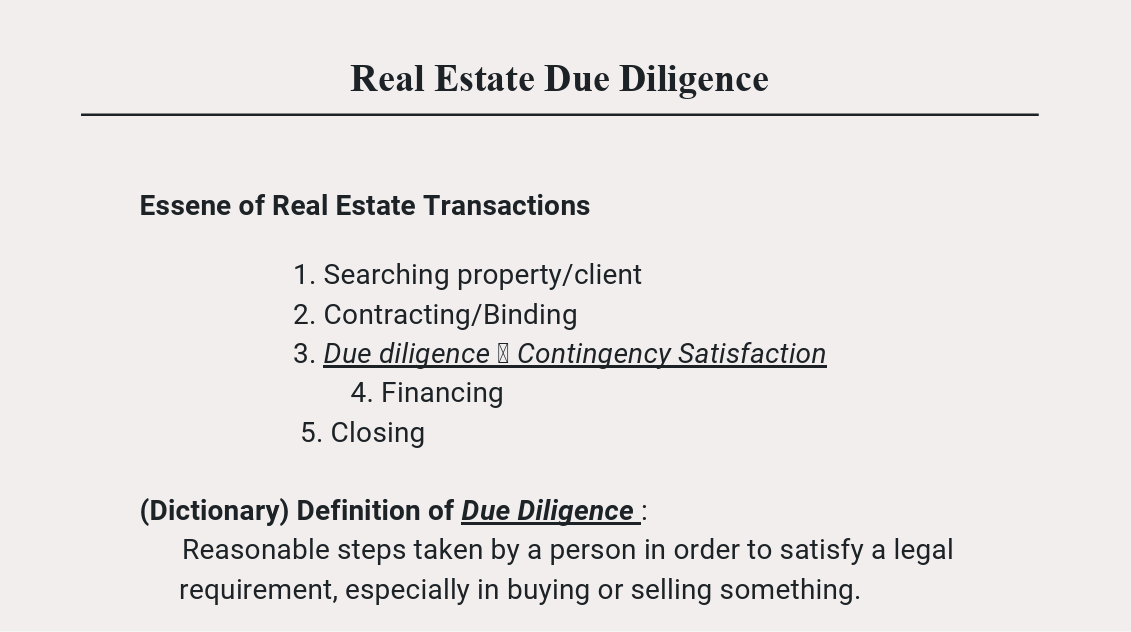
In real estate brokering, due diligence is essentially the “homework” phase.
It is a specific window of time after a buyer’s offer is accepted where they get to thoroughly investigate the property,
the legal paperwork, and the surrounding area to ensure they are getting exactly what they think they are buying.
Think of it as the ultimate “look before you leap” safety net. If the buyer discovers major undisclosed problems during this period,
they can typically walk away from the deal and get their earnest money deposit back.
Definition of Due diligence :
1. “Due Diligence” term is used mainly commercial contracts/transactions.
2. Making a considerable effort to perform under the contract.
3. Making a reasonable effort to provide accurate, complete information. A study that often precedes the purchase of property,
which considers the physical, financial, legal, and social characteristics of the property and expected investment performance: the underwriting of a loan or investment.
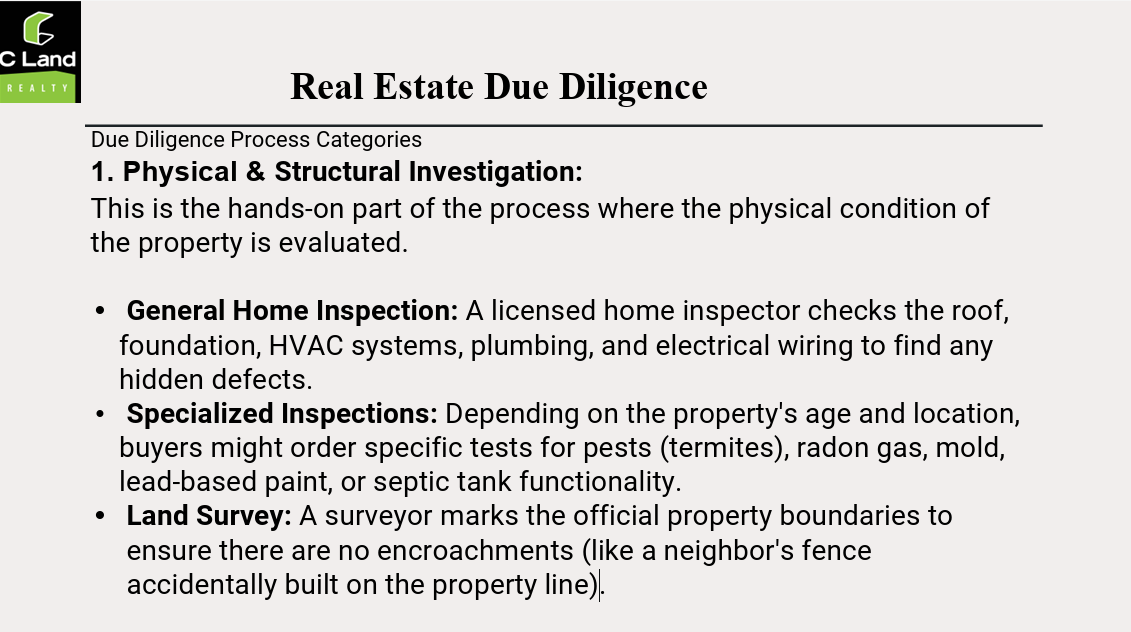
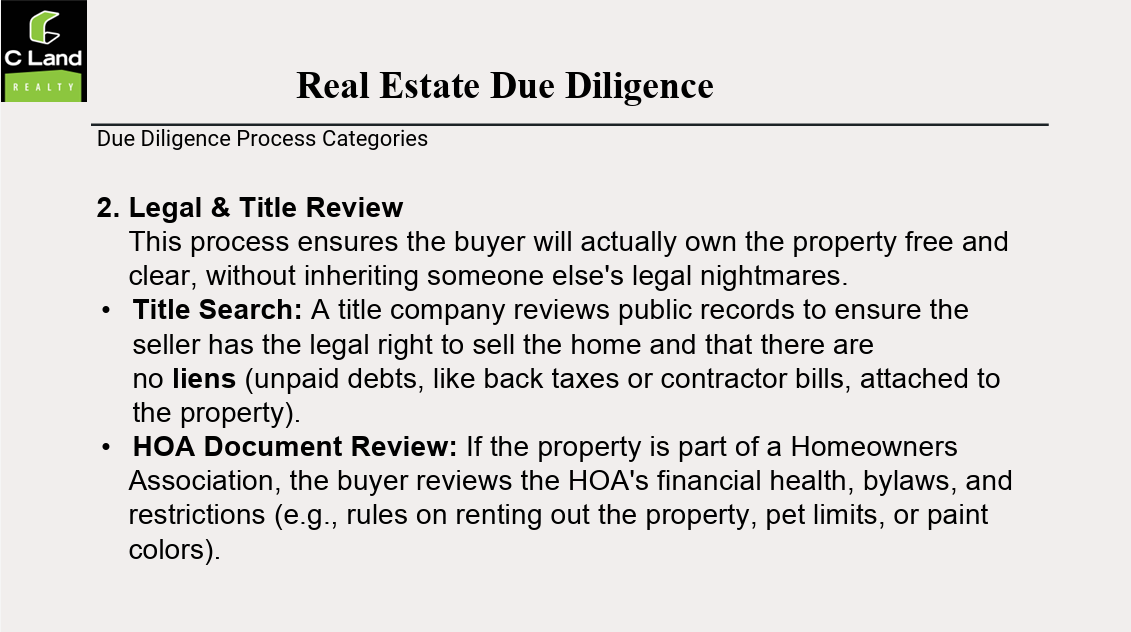
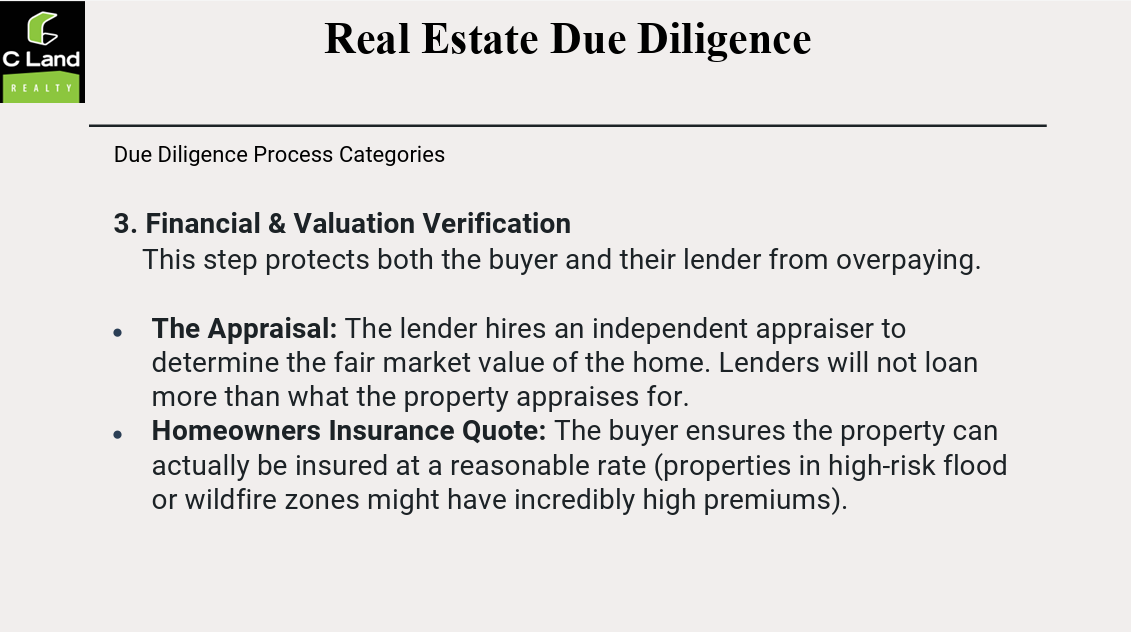
Residential vs Commercial
● While the core goal of due diligence is the same for both—protecting the buyer from a bad investment—the scale,
complexity, and specific focus areas differ massively between residential and commercial real estate.
● Residential due diligence focuses on livability and structural safety, whereas commercial due diligence focuses on profitability, zoning, and liability.
1. Timeline and Scope
● Residential: The due diligence period is relatively short, typically lasting 7 to 14 days. The scope is standard and predictable, usually involving a single general home inspector.
● Commercial: Because the stakes are much higher, commercial due diligence routinely takes 30 to 90 days (or even longer). It requires a team of specialized experts (structural engineers, environmental scientists, forensic accountants, and land-use attorneys).
2. Financial Scrutiny
● Residential: The financial check is mostly about the buyer’s ability to get a mortgage and making sure the house appraises for the purchase price.
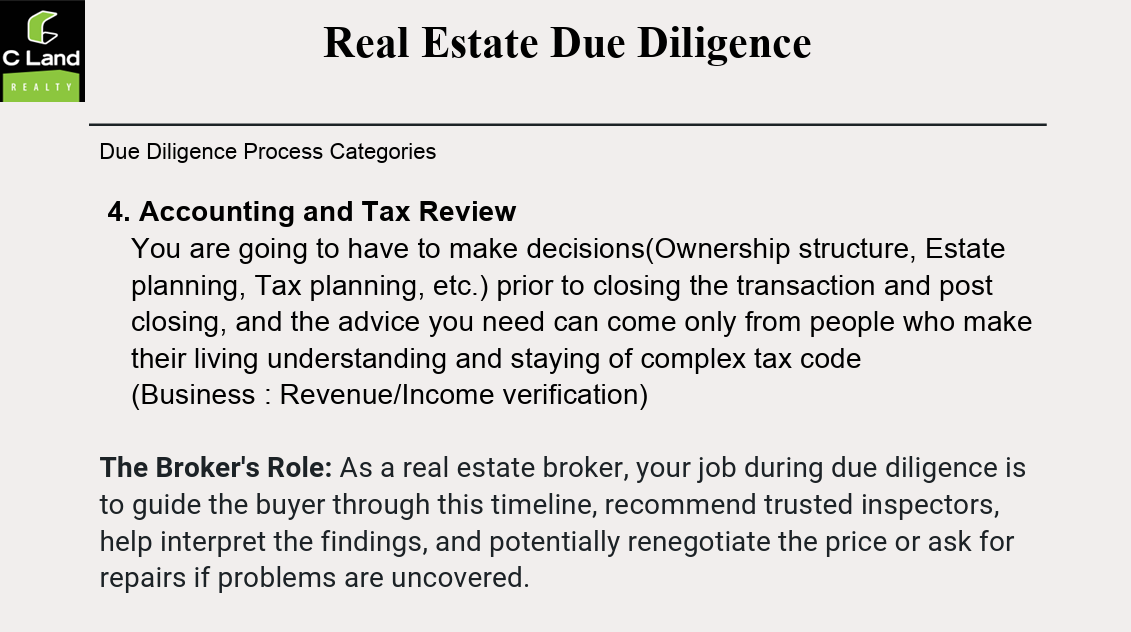
● Commercial: The property itself is evaluated like a business. The buyer conducts forensic accounting on the property’s books.
They will audit: Current leases: Are the tenants paying on time? When do the leases expire?
Profit & Loss (P&L) statements: Verifying the actual Net Operating Income (NOI) Estoppel certificates:
Signed statements from current tenants confirming the terms of their lease so the seller can’t fake the numbers.
3. Environmental and Zoning Investigations
● Residential: Environmental checks are usually limited to simple tests for radon, mold, or lead-based paint.
Zoning is rarely an issue because the property is already classified as a home.
● Commercial: This is a major legal minefield. Commercial buyers almost always require a Phase I Environmental Site Assessment (ESA).
If a previous tenant (like a gas station or dry cleaner) spilled toxic chemicals, the new owner could be held legally liable for millions in cleanup costs.
( Phase II, III) Buyers also must verify complex zoning laws to ensure
their specific business format (parking space ratios, signage rules, or manufacturing types) is legally allowed.



Join The Discussion