
Misrepresentation & failure to disclosure
Principles of Misrepresentation Liability
• Misrepresentation is the most common claim against real estate brokers.
• Claims are most often brought by disgruntled purchasers who discover,
after closing rather than before, defects in the physical condition or other undesirable characteristics of the property.
• Brokers should develop policies and practices to eliminate the possibility of such claims or minimize the risk that purchasers will encounter such problems after closing
Preliminary Matters
• Caveat Emptor (Buyer Beware) — Requires that a seller of property and his or her broker speak truthfully if they speak at all;
therefore, this is not a basis on which a broker can be liable for misrepresentation or nondisclosure but, instead, can be used as a defense to a buyer’s claim.
• In many states, caveat emptor continues to apply,
such that a broker is not obligated to provide unfavorable information about the property and is not liable for failing to disclose defects, known or unknown, to the purchaser.
But even in those states, intentionally misleading or fraudulent statements or acts by a seller or broker are nevertheless prohibited.
• In other states, caveat emptor has shifted from “buyer beware” to “broker take care” through case law,
so that sellers and brokers are obligated to affirmatively disclose known property defects.
• Many states now use seller property condition disclosure statutes or extend consumer protection
or deceptive trade practices laws to real estate transactions in place of caveat emptor.
• In states where caveat emptor is applied by case law, seller disclosure requirements have been adopted,
requiring sellers to disclose certain specified information about the property.
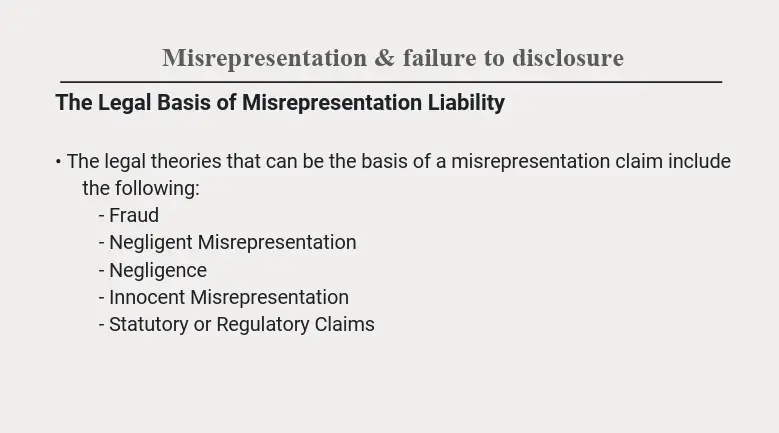
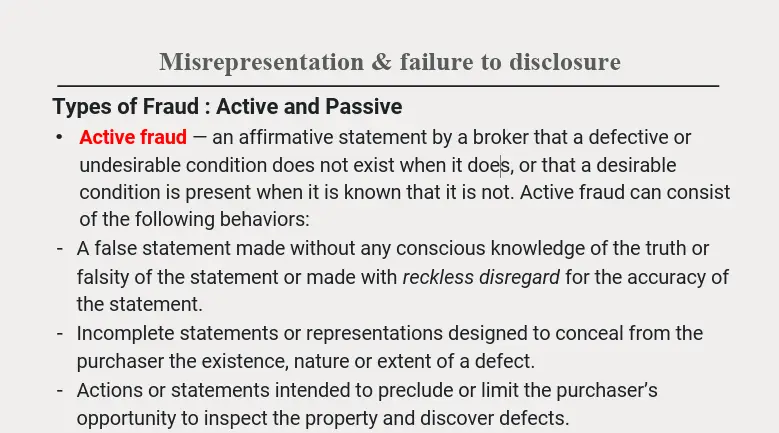
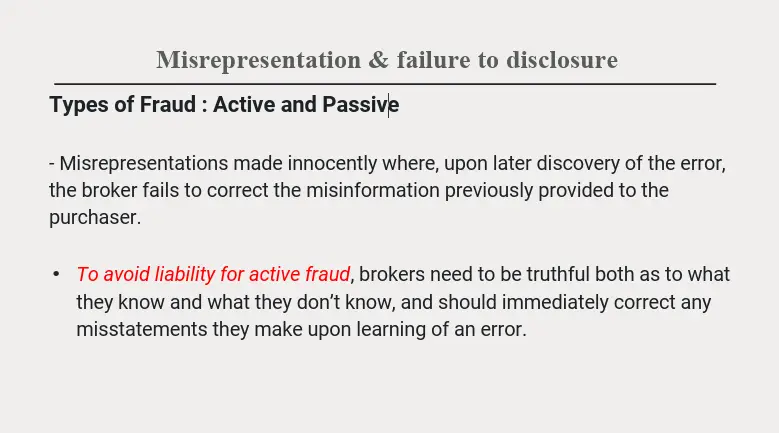
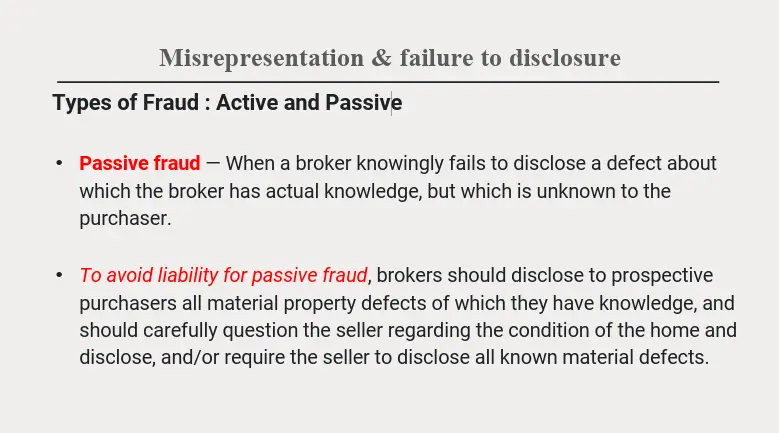
Remedies for Misrepresentation
1.Actual Damages
• Damages may be either the difference between the value of the property as is and the value of the property as represented,
or the costs to repair defects in the property.
2.Punitive Damages
• When the broker’s misrepresentation has been particularly blatant or willful, courts have imposed punitive damages to deter similar conduct in the future.
• The amount of punitive damages is not necessarily related to the amount of actual damages suffered by the purchaser,
but rather to the severity of the broker’s wrongful conduct.
3.Rescission
• If money damages cannot compensate the purchaser for defects in the property or at the request of the purchaser,
the court may order a rescission of the contract, thereby returning the parties to their positions prior to signing the contract.
4.Loss of Licenses.
• A broker may have his or her real estate license suspended or revoked as a result of misrepresentation.
5.Code of Ethics Violations
• Misrepresentation or concealment of pertinent facts, particularly if done knowingly and intentionally, may violate NAR’s Code of Ethics.
A broker may be subject to sanctions by the local association of REALTORS®.
Broker Actions to Reduce Risk
• Disclose all positive and negative aspects of the property.
• Document Statements and Events.
• Conduct an Examination of the property and watch out for “Red Flag”.
• Describe the Property carefully and factually.
• Answer specific question carefully.
• Encourage Use of other Professionals.
• Keep count on New Development Affecting Real Estate.



Join The Discussion